
Read a crater view in layers
The crater is more than a distant outline. Read vegetation, water and scale together, then ask what a proposed visit actually includes.
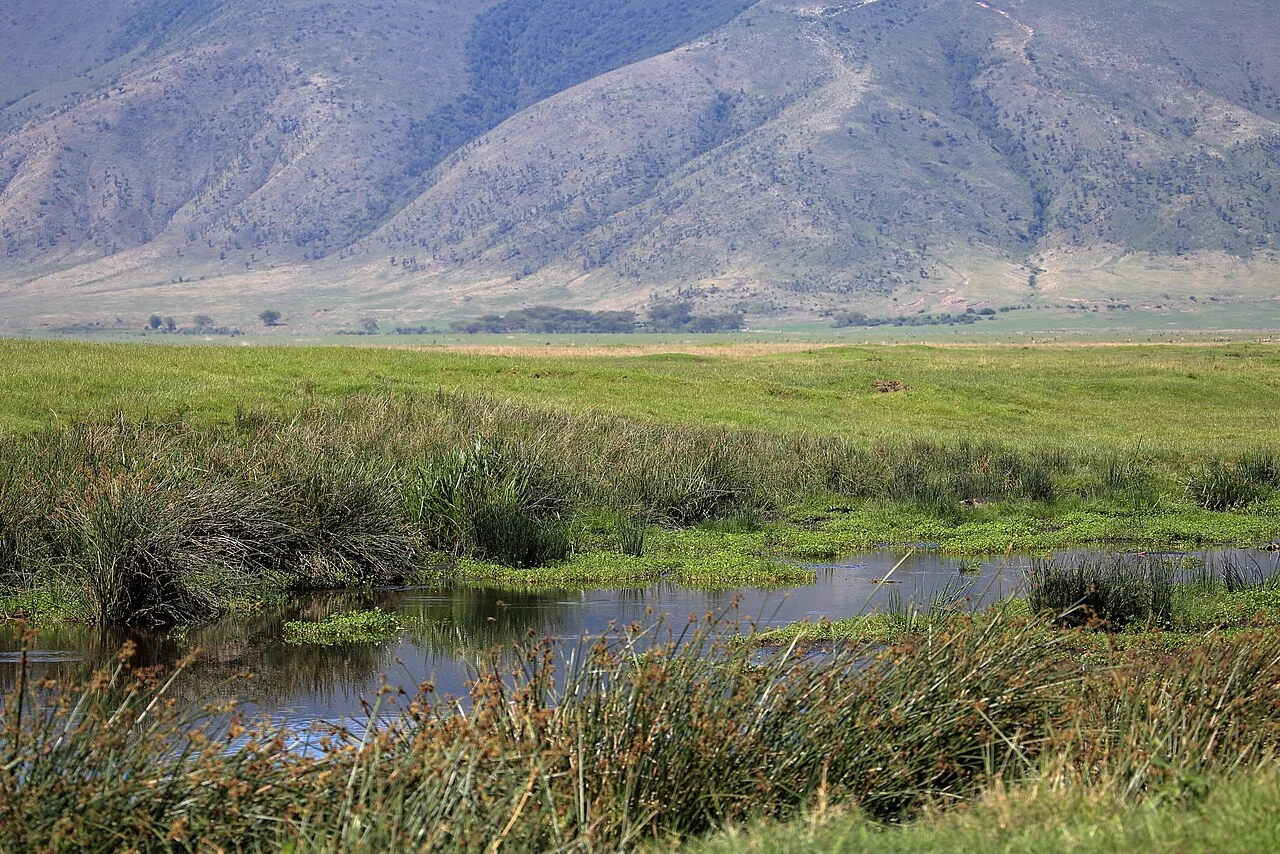
A view of Ngorongoro can appear complete before you have understood very much about it. A distant rim, an open basin and a pale patch of water make a memorable arrangement. The useful next step is to give each element a name and a relationship. What lies close to your viewpoint? Which features belong to the crater floor? What disappears when the photograph is reduced to a small screen?
Begin with the foreground
Grass, water and woodland offer a different starting point from the broad outline. UNESCO describes a conservation area with varied habitats, rather than one uniform landscape. The Ngorongoro Lengai Geopark also distinguishes grasslands, wetlands and wooded areas within the crater. A photograph of one wet corner should therefore remain a photograph of that particular view, not a visual summary of every place your itinerary might reach.
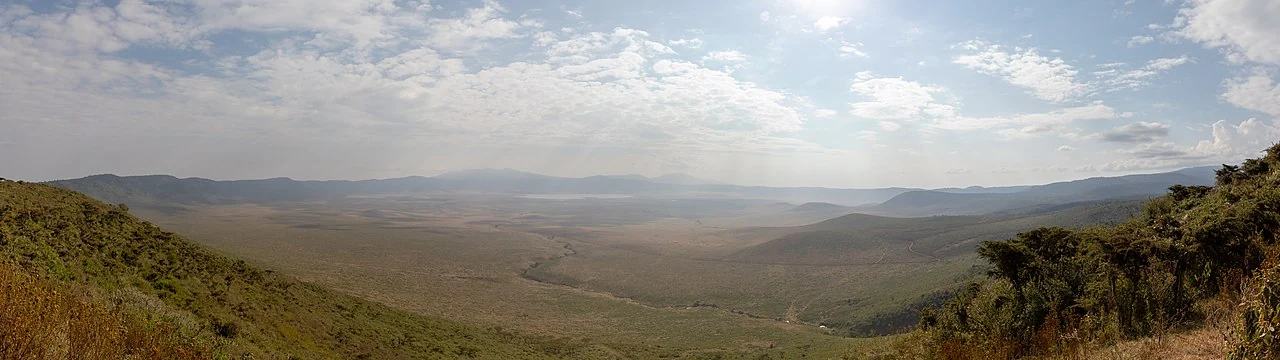
When you compare photographs, read their captions before treating them as interchangeable evidence. A crater-floor image and a rim panorama explain different things. The date is useful too: it records the conditions of that photograph without promising the same appearance during your own visit. Clear captions can be more informative than a collection of dramatic images with no location attached.

Change the scale of your questions
| Perspective | What it helps explain | What to check separately |
|---|---|---|
| Close habitat detail | The material and vegetation within a small field of view | Its exact location and the photograph’s date |
| Crater panorama | The relationship between basin and surrounding slopes | Your actual viewpoint and conditions on the day |
| Named visit | The places and activities described in an itinerary | Access, guiding, transport and inclusions |
Keep wildlife in its setting
Wildlife photographs deserve the same care. A species pictured on a listing is not an appointment with that animal. Read the provider’s description for the actual route and activity, and keep the surrounding habitat in your understanding of the image. A wide scene with a small animal can communicate its environment more honestly than a tightly cropped portrait used without context.
Ask what the guide will help you understand while you are observing. Questions about water, vegetation and the relationship between different areas can make a visit more thoughtful even when a particular animal is not present. Avoid building your expectations around a checklist that a photograph alone cannot support.
Turn the view into a clear plan
A comparison should explain whether it concerns a viewpoint, a crater visit, a wider conservation-area journey or a combination named in the itinerary. Those descriptions are not substitutes for one another. Confirm the starting point and finishing point, what transport is included, how guiding is arranged and which additional charges or permissions are addressed by the provider.
Keep the questions practical and specific. If a description is unclear, ask for the named places in writing before choosing. Use the official authority’s current visitor information for operational details. An attractive panorama can introduce Ngorongoro; a clearly explained arrangement is what helps you decide whether a particular visit suits you.
Landscape context: UNESCO’s Ngorongoro Conservation Area record and the Geopark’s attraction descriptions.